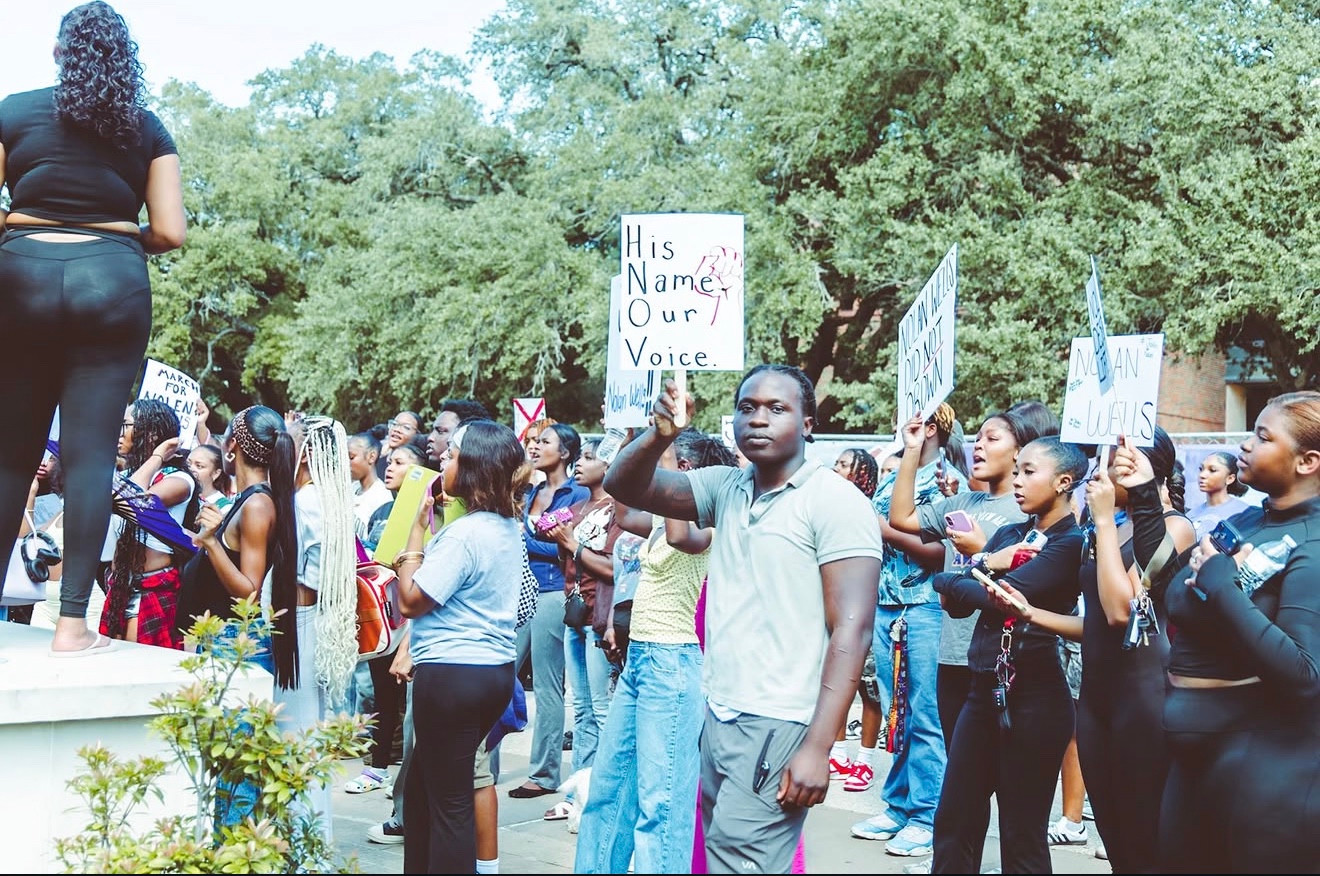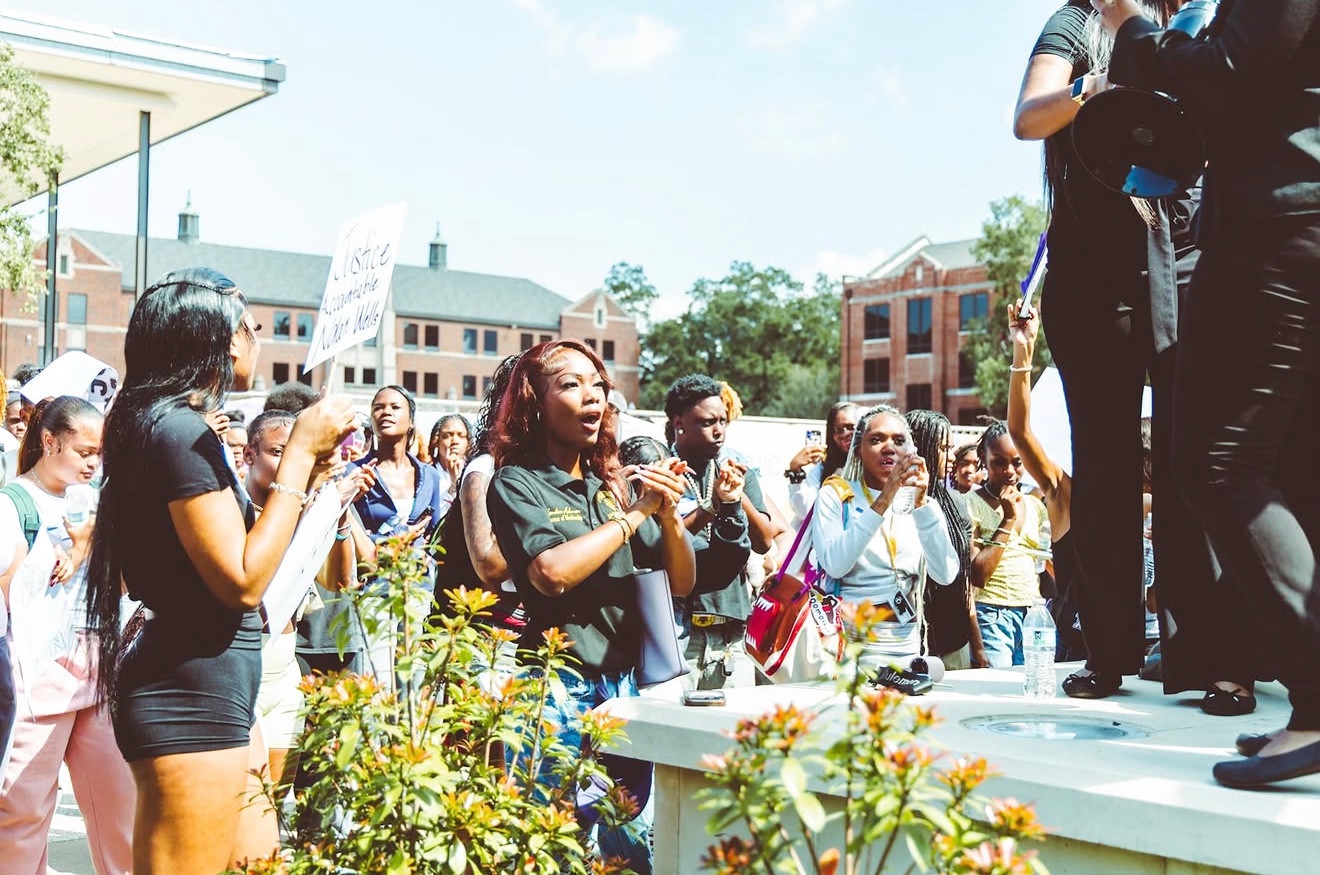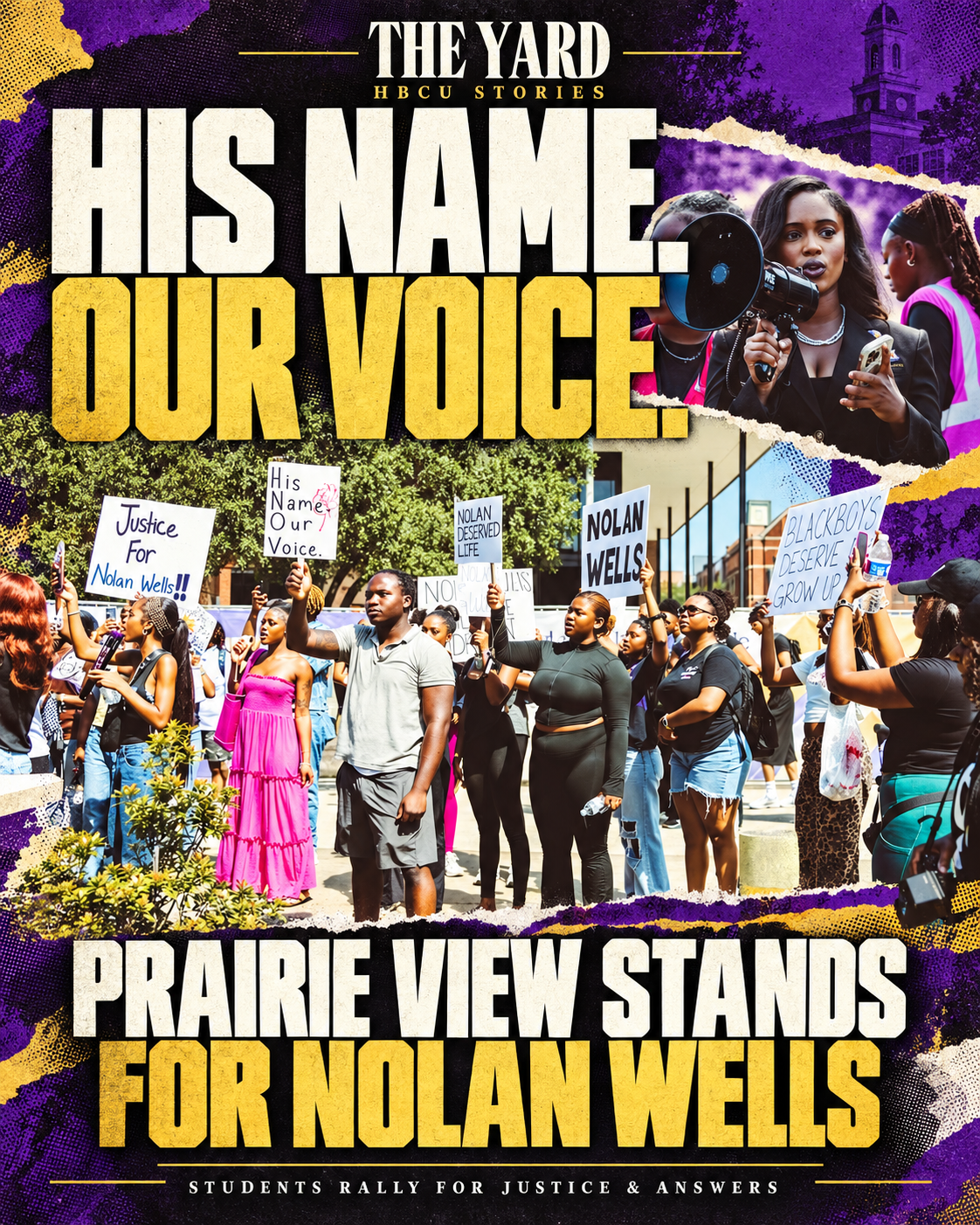
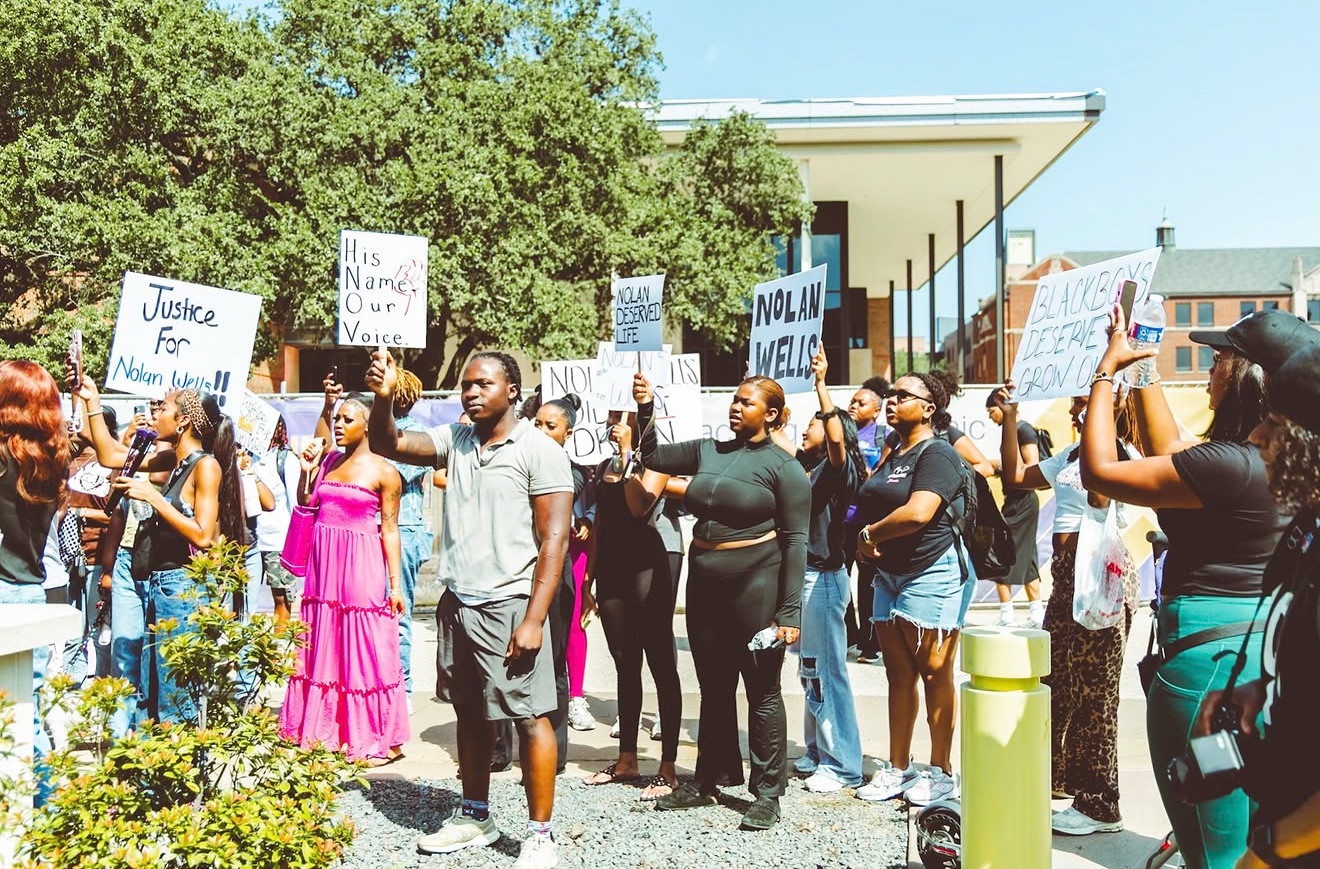
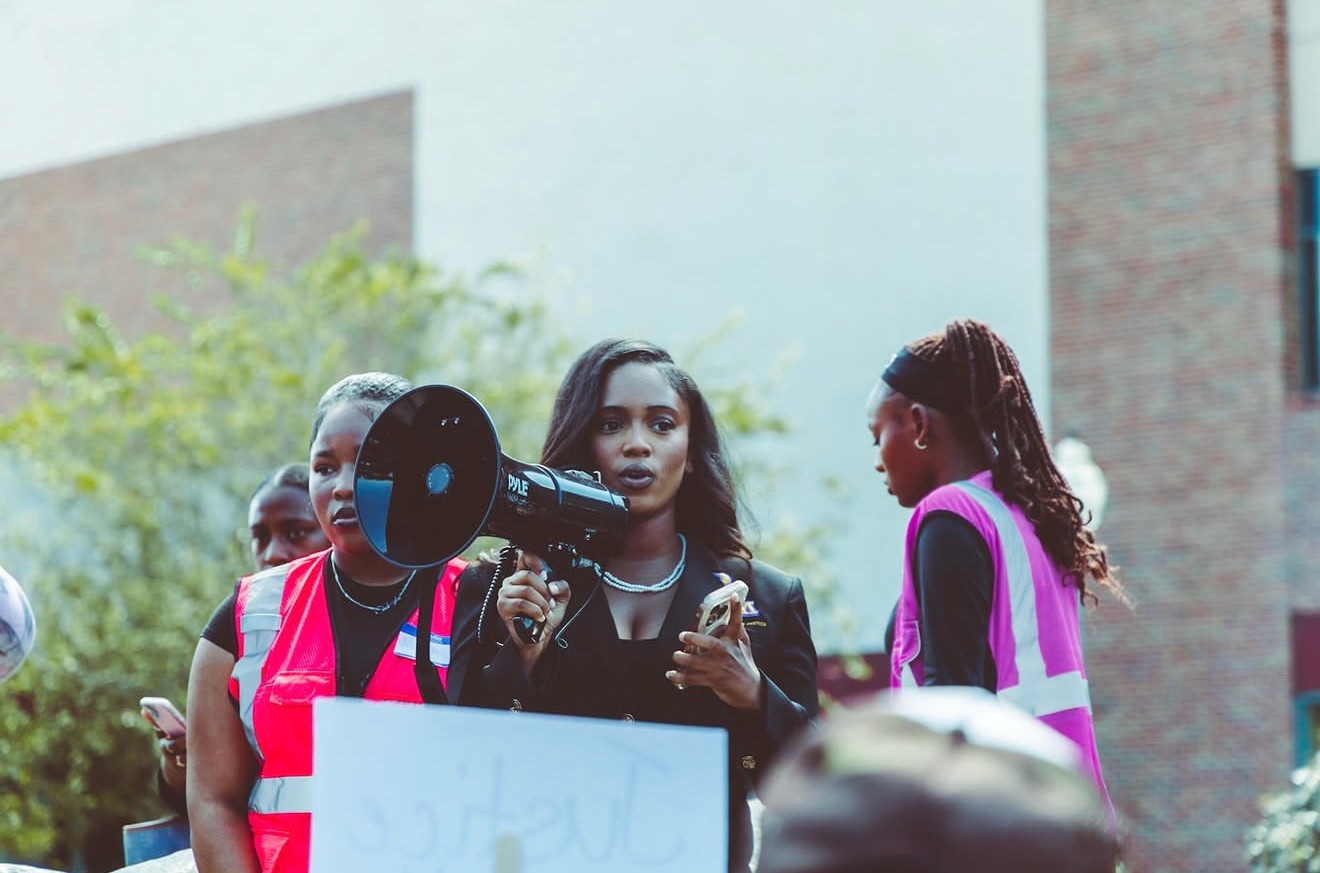
One handwritten sign says, “His Name. Our Voice.” Around it, students hold Nolan Wells’s name above the crowd. Another sign calls for Black boys to have the chance to grow up. In the photographs shared with The Yard, the message is visible in the raised posters, the gathering around a speaker and the megaphone held ready to carry a voice farther.
Prairie View students joined that week’s calls for answers, The Guardian reported on October 9.
Nolan was 18, a Mississippi student-athlete whose death has left his family seeking a fuller account of his final hours. He was not a Prairie View student. The solidarity shown here reaches beyond the boundaries of one campus.
A family still asking questions
Wells was reported missing after a July 4 boating trip with friends. His body was recovered from the water off Mississippi’s Horn Island on July 6. In September, a Jackson County grand jury returned no indictment, according to WLOX’s reporting.
The distinction between the grand jury’s assessment and the medical findings matters. The panel described the circumstances as consistent with drowning. The state and independent medical examinations listed the cause and manner of death as undetermined, as the family’s legal team explains in its September statement.
Attorney Ben Crump and the family’s other lawyers have asked for continued investigation, release of the investigative records and an independent federal review. They have also raised questions about injuries described in the examinations. Those concerns are the family’s stated position; they do not establish that a crime occurred or identify someone responsible. The public record leaves central questions unresolved.
The Hill has raised its voice before
Prairie View’s history gives this moment a deeper setting. Generations of students have turned shared concerns into public action, whether the issue was segregation, access to the ballot or a death that shook the community.
1963: A homecoming boycott. In a university-published historical account, political scientist Melanye T. Price recalls PV students protesting businesses in nearby Hempstead that refused to serve Black customers. Drawing on The Panther, she also describes the 1963 homecoming boycott, when students and alumni withdrew from festivities and gathered for civil rights outside the student center.
2004: The walk for voting rights. On January 15, students marched from campus to the Waller County Courthouse to defend their ability to vote locally after the district attorney questioned their eligibility. The Houston Chronicle reported that at least 2,000 students made the six-mile walk.
2015: Standing for Sandra Bland. After the death of PVAMU alumna Sandra Bland, the Student Government Association joined the city of Prairie View in a march to the same courthouse demanding justice. The SGA’s own account also documents student participation in a candlelight vigil.
Each moment had its own facts, organizers and demands. Together, they show a campus tradition of making community concerns visible through collective action. That history helps explain why a gathering on the Yard belongs in a story larger than a single afternoon.
Keeping his name in view
The photographs preserve that act of showing up: signs lifted overhead, people listening, a speaker surrounded by others. They offer a view of students making space for Nolan’s name and for his family’s demand to be heard.
For readers following the case, the next step is to stay close to the evidence: distinguish official findings from allegations, read the family’s requests in its own words and resist turning unanswered questions into certainty. The call for transparency can be clear even while the cause of Nolan’s death remains undetermined.